
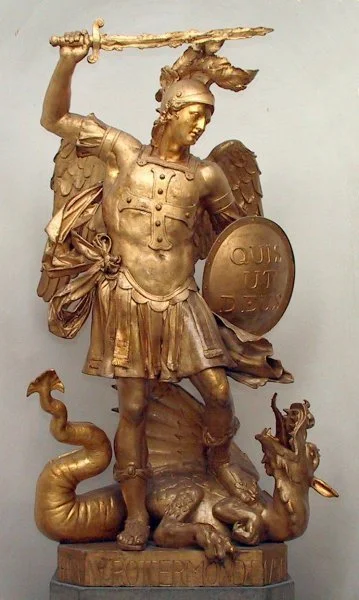
Archangel Michael: a model of discipline and faithful service
Who is Archangel Michael?
Saint Michael the Archangel is one of the most important angels mentioned in Sacred Scripture. His name means “Who is like God?”, a powerful reminder that God alone is worthy of worship and obedience.
The Bible presents Michael as a leader of the heavenly hosts and a defender of God's people. He appears in the Book of Daniel, the Letter of Jude, and most prominently in the Book of Revelation, where he leads the forces of heaven against the powers of evil.
Leader of the heavenly host
The Book of Revelation describes a great battle in heaven:
“Michael and his angels fought against the dragon.” (Revelation 12:7)
Michael does not act for his own glory. He acts in obedience to God and in fulfillment of his mission. He leads with discipline, courage, and unwavering commitment to what is right.
His example shows that true authority is exercised through faithful service rather than personal ambition.
Perfect obedience and order
One of Michael's most striking characteristics is his complete fidelity to God.
Unlike the fallen angels who rebelled against God, Michael remained faithful. He chose obedience over pride and service over self-interest.
This is why Christian tradition sees him as a powerful symbol of discipline. Michael demonstrates that discipline is not merely following rules. True discipline is the ability to remain committed to truth, duty, and right conduct even when faced with temptation or opposition.
Defender of good and protector of others
Michael's mission is not focused on himself. He serves God by protecting others and opposing evil.
For this reason, he is often regarded as the patron and protector of soldiers, police officers, and all who are called to defend others.
His example teaches that strength must always be guided by moral purpose. Power without discipline can become destructive, but disciplined strength serves justice, peace, and the common good.
Why is Archangel Michael venerated?
Archangel Michael is honoured because he embodies faithfulness, courage, discipline, and obedience to God's will.
He reminds believers that every mission should be carried out with integrity, order, and a clear sense of purpose.
Throughout the centuries, Christians have looked to Saint Michael as a protector in times of danger and as an example of steadfast service.
What can we learn from Archangel Michael?
Archangel Michael remains a powerful role model, especially for military personnel.
His example reminds us that:
• Discipline requires self-control and commitment to duty.
• Propriety means acting with integrity and respect.
• Leadership is rooted in service rather than personal gain.
• Order and responsibility are essential for every mission.
• Courage is strongest when guided by moral principles.
Military personnel are entrusted with special responsibilities. Technical skill and courage are important, but so are discipline, integrity, and respect for others.
Archangel Michael teaches that true strength is found in faithful service, disciplined action, and unwavering commitment to what is right.
Feast Day
The feast of Saints Michael, Gabriel, and Raphael, Archangels is celebrated on 29 September. Saint Michael is honoured throughout the world as the protector of the Church and a patron of all who dedicate their lives to serving and defending others.
St. Michael the Archangel, defend us in battle. Be our defence against the wickedness and snares of the Devil. May God rebuke him, we humbly pray, and do thou, O Prince of the heavenly hosts, by the power of God, thrust into hell Satan, and all the evil spirits,
who prowl about the world seeking the ruin of souls. Amen.
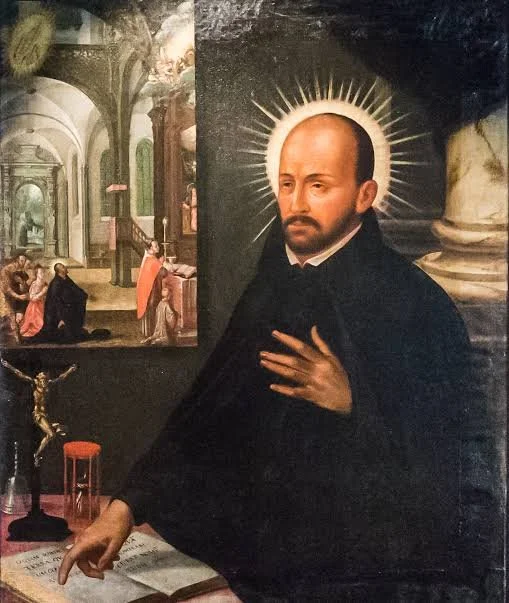
Saint Ignatius of Loyola: discipline in the service of God
The early life of Ignatius
Saint Ignatius of Loyola was born in 1491 into a noble family in the Basque region of Spain.
As a young man, he dreamed of becoming a successful knight and serving his king with honour. He valued courage, discipline, and achievement and pursued a military career.
In 1521, during the defence of Pamplona, Ignatius was seriously wounded by a cannonball. During his long recovery, he asked for books about knights and heroic adventures. Instead, he was given books about the life of Christ and the saints.
As he read them, he began to reflect deeply on the purpose of his life. Gradually, he realised that he wanted to dedicate himself completely to the service of God.
A new mission
After his conversion, Ignatius did not act impulsively. He approached his new mission with the same determination and discipline that had characterised his military service.
He spent long periods in prayer, reflection, and study. He carefully examined his thoughts, motivations, and actions in order to align them with God's will.
Ignatius understood that lasting change requires discipline, perseverance, and self-control.
The Spiritual Exercises
One of Ignatius' greatest contributions to the Church was the development of the Spiritual Exercises.
The Spiritual Exercises are a method of prayer and reflection designed to help people discern God's will and grow in self-discipline and spiritual maturity.
Ignatius taught that a person should not be driven by emotions, impulses, or personal preferences alone. Instead, decisions should be made through careful reflection, prayer, and discernment.
His approach combines discipline of mind, heart, and action.
Founder of the Society of Jesus
In 1540, Ignatius founded the Society of Jesus, commonly known as the Jesuits.
The Jesuits became known for their discipline, education, commitment to mission, and willingness to serve wherever they were needed.
Ignatius expected high standards from himself and from those who followed him. At the same time, he emphasised respect for others, responsible leadership, and service to the common good.
Under his leadership, the Jesuits established schools, universities, and missions throughout the world.
Discipline and proper conduct
Ignatius taught that discipline is not merely about obeying rules. True discipline means ordering one's life towards a worthy purpose.
He believed that personal discipline creates freedom. A disciplined person is better able to control emotions, resist temptation, make sound decisions, and remain focused on a mission.
At the same time, Ignatius emphasised propriety, respect, and consideration for others. He knew that leadership requires not only competence but also integrity and good conduct.
Why is Saint Ignatius venerated?
Saint Ignatius is honoured because he transformed his life and dedicated his talents, energy, and leadership abilities to the service of God and others.
His life demonstrates that discipline and perseverance can help individuals overcome difficulties, grow in character, and fulfil their mission faithfully.
Throughout the centuries, his teachings have helped countless people develop stronger habits of prayer, reflection, leadership, and responsible action.
What can we learn from Saint Ignatius of Loyola?
Saint Ignatius remains an outstanding role model, especially for military personnel.
His example reminds us that:
• Discipline begins with self-control.
• Good decisions require reflection and discernment.
• Leadership demands integrity and responsibility.
• Respect for others is essential to professional conduct.
• A clear mission requires commitment and perseverance.
Military personnel often operate under demanding conditions where discipline, reliability, and sound judgement are essential.
Saint Ignatius teaches that true discipline is not simply following orders, but developing the character, self-mastery, and integrity needed to fulfil one's mission honourably and responsibly.
Feast Day
The feast day of Saint Ignatius of Loyola is 31 July. He is honoured as the founder of the Society of Jesus and remains a model of disciplined leadership, spiritual discernment, and faithful service.
St. Ignatius of Loyola, pray for us!