

Saint George: The Soldier Who Remained Faithful
The Life of Saint George
There is very little reliable information about the historical life of Saint George.
He is said to have lived in the 3rd century and to have come from Cappadocia (modern-day Turkey) or the eastern Mediterranean region.
According to tradition, he was a Roman soldier and may have served in the imperial army.
George professed the Christian faith at a time when Christians were being persecuted in the Roman Empire. During the reign of Emperor Diocletian (around 303 AD), he was arrested for his faith and ordered to renounce his Christian beliefs. George, however, remained steadfast.
According to tradition, he was tortured and eventually put to death as a martyr.
His death is generally dated to around 303/304 AD.
George – the soldier who remained true to his conscience
The story of Saint George depicts a man caught between conflicting loyalties: he was a soldier of the Roman Empire, yet at the same time a Christian. When the state demanded that he renounce his faith, he placed his conscience above personal gain and safety.
His stance serves as a reminder of the importance of conscience and responsibility:
• A person needs inner convictions.
• Not every order or demand should be carried out blindly.
• Loyalty to higher values can require courage.
George demonstrated that true strength lies not only in physical power or military skill, but in the ability to stand up for what is right, even under pressure.
The Legend of the Battle with the Dragon
The best-known tale about Saint George is the legend of his battle with a dragon.
According to this story, a dangerous dragon was threatening a town. To appease the dragon, the inhabitants had to sacrifice animals to it regularly, and eventually even human beings. When the lot fell on the king’s daughter, George appeared and confronted the dragon.
With his faith and courage, he defeated the monster and freed the people.
Symbol
His well-known depiction is that of the knight on horseback defeating the dragon. It serves as a reminder that, with courage, faith and a sense of responsibility, people can stand up against evil in the world.
The message is this: everyone encounters ‘dragons’ in their lives - challenges, temptations and injustices. What matters is whether one finds the courage to face them.
Why is Saint George venerated?
St George is venerated because, as a martyr, he remained true to his faith. He was not canonised because he was a famous warrior, but because he was prepared to stand up for his convictions.
Significance for us today
St George reminds us that every person bears a responsibility when they witness injustice. Courage does not mean being without fear. Courage means doing the right thing despite fear.
For soldiers, St George can be an important role model:
• Strength is not for self-assertion, but for the protection of others.
• Responsibility requires character and a conscience.
• A mission always requires an ethical compass.
His life poses the question:
“What am I prepared to stand up for when the going gets tough?”
Feast Day
The feast day of St George is 23 April.
Among other things, he is the patron saint of:
• soldiers,
• scouts,
• horsemen,
• farmers,
• several countries and regions.
“It is not the strength of the sword that matters, but the strength of the heart.”
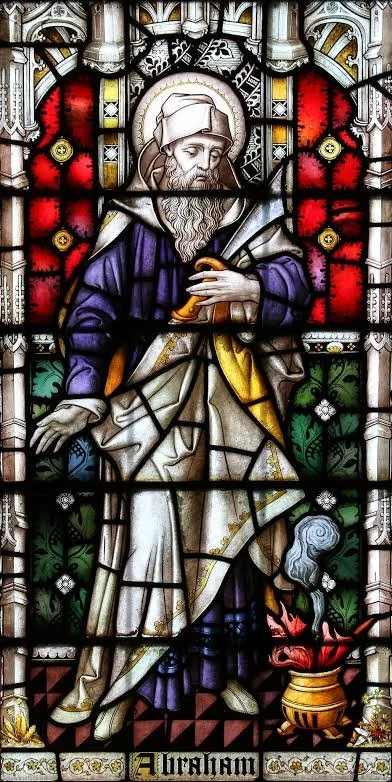
Abraham: The Father of Faith
The Life of Abraham
Abraham is one of the most important figures in the Bible. He is known as the Father of Faith because he trusted God and obeyed Him even when the path ahead seemed uncertain. Originally called Abram, he lived in the city of Ur. One day, God called him to leave his homeland, his relatives and everything familiar to him and journey to a land that God would show him. Abraham did not know where the journey would lead. Yet he trusted God and accepted the mission.
"By faith Abraham obeyed when he was called to go out to a place that he was to receive as an inheritance." Hebrews 11:8
Answering God's Call
Leaving his home required both courage and determination. Abraham could have chosen the safety and comfort of a familiar life. Instead, he placed his duty to God above personal convenience and security. His journey was not easy. He faced uncertainty, hardship and many challenges. Yet he remained faithful to the mission entrusted to him. Abraham teaches us that duty often requires sacrifice. Fulfilling a mission may demand leaving behind comfort and embracing uncertainty.
Trust in Difficult Circumstances
God promised Abraham that he would become the father of a great nation. Yet for many years, he and his wife Sarah remained without children. Despite delays and difficulties, Abraham continued to trust in God's promise. Eventually, God fulfilled His word, and Isaac was born. This part of Abraham's life reminds us that courage is not only required in moments of danger. Sometimes courage means remaining patient, faithful and hopeful when results are not immediately visible.
The Supreme Test
The greatest test of Abraham's faith came when God asked him to offer his son Isaac.
The command was difficult to understand, yet Abraham chose to trust God. He set out on the journey and prepared to obey. At the decisive moment, God stopped him and provided a ram to be sacrificed instead. The story demonstrates Abraham's complete trust in God and his willingness to place God's will above his own plans and desires. It also reveals that true obedience is rooted in faith rather than fear.
Why Is Abraham Remembered?
Abraham is remembered because he answered God's call with courage and remained faithful throughout his life. He showed that genuine bravery is not merely physical courage. True bravery is the willingness to do what is right even when the future is uncertain and the cost is high. His life united faith, duty, perseverance and trust.
What Can We Learn from Abraham?
Abraham remains a powerful role model, especially for military personnel. His example reminds us that:
Duty often requires sacrifice and perseverance.
Bravery is acting despite uncertainty and fear.
Trust provides strength in difficult situations.
Faithfulness is essential when carrying out a mission.
Leadership requires remaining committed to what is right, even when the path is challenging.
Military personnel are often called upon to make difficult decisions, accept demanding responsibilities and carry out missions under uncertain conditions.
Abraham teaches that true courage begins with trust and that fulfilling one's duty requires faithfulness, perseverance and the willingness to follow the right path regardless of the obstacles.
Commemoration
Abraham is honoured throughout Jewish, Christian and Islamic traditions as a model of faith, obedience and trust in God. His example continues to inspire all who seek to serve faithfully and courageously.