
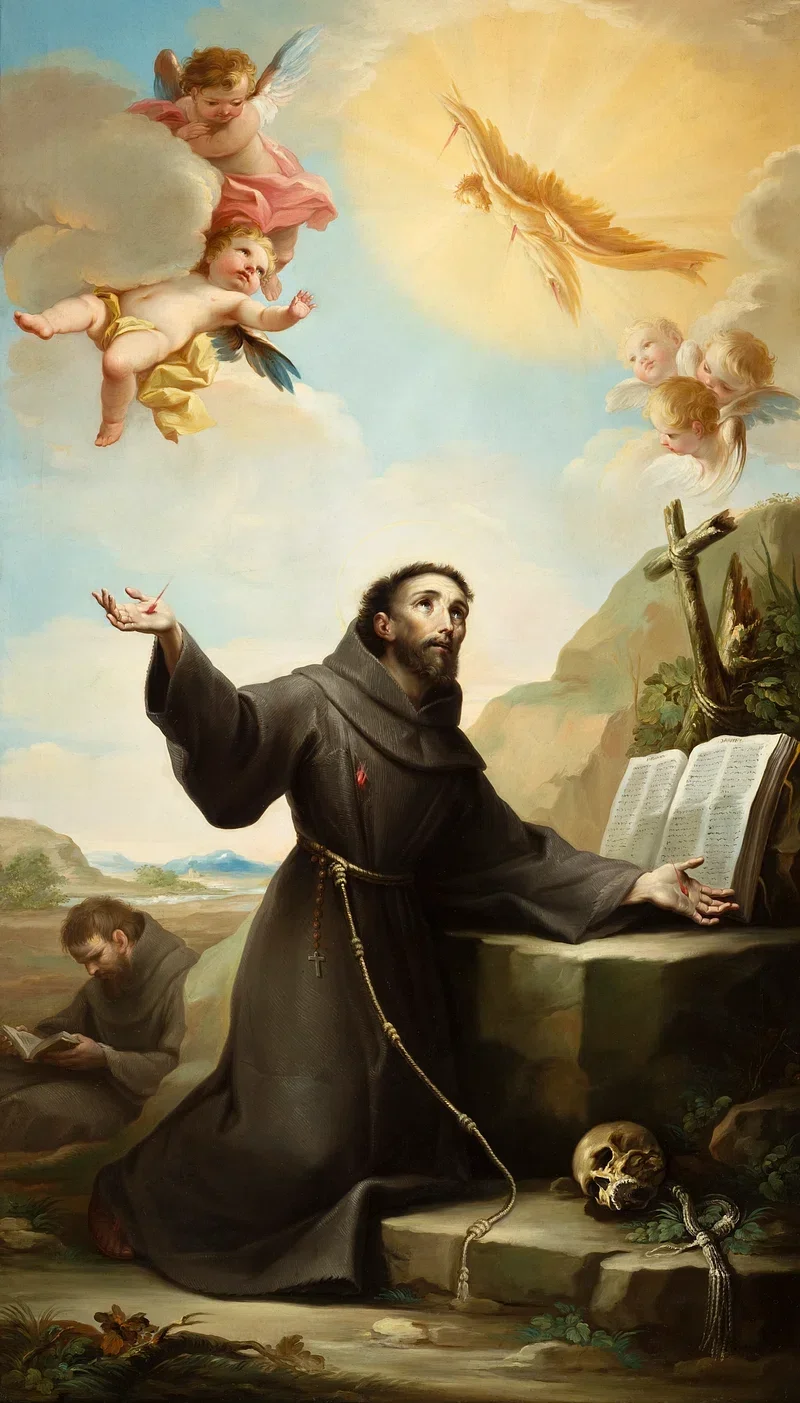
Saint Francis of Assisi: respect for all of God's creation
The early life of Francis
Saint Francis of Assisi was born around 1181 in the Italian town of Assisi. His father was a successful merchant, and Francis grew up in comfortable circumstances. As a young man, he enjoyed a carefree life and dreamed of achieving honour and success as a knight.
However, after experiencing war, imprisonment, and illness, Francis began to question the purpose of his life. Gradually, he realised that true happiness is not found in wealth, status, or personal ambition, but in serving God and others.
A radical change of life
Francis chose to leave behind his former way of life and dedicate himself completely to God.
He embraced a life of simplicity, poverty, and service. Rather than seeking privilege or recognition, he devoted himself to helping the poor, the sick, and those whom society often overlooked.
One of the most famous moments in his life occurred when he encountered a man suffering from leprosy. At that time, lepers were often feared, rejected, and excluded from society.
Instead of turning away, Francis approached the man, treated him with compassion, and cared for him.
This encounter transformed his life and taught him to recognise the dignity of every human being.
Respect for all people
Francis believed that every person possesses God-given dignity and deserves to be treated with respect.
He did not judge others by their wealth, social standing, nationality, or appearance. Whether speaking with rulers, merchants, peasants, or outcasts, he treated everyone with kindness and respect.
His attitude reflected a profound conviction: every human being is a child of God and worthy of love and consideration.
Responsibility for creation
Francis is also remembered for his deep appreciation of God's creation.
He saw nature as a gift entrusted to humanity and believed that people have a responsibility to care for it wisely.
His famous Canticle of the Creatures praises God for the sun, moon, water, animals, and all creation. This respect for creation flowed from his belief that everything ultimately belongs to God.
Francis teaches that responsibility includes caring not only for people, but also for the world entrusted to us.
Founder of the Franciscan Order
As more people were inspired by his example, Francis founded the Order of Friars Minor, commonly known as the Franciscans.
He encouraged his followers to live with humility, simplicity, and respect for others. Through their words and actions, they sought to bring peace, reconciliation, and hope wherever they went.
Francis led not through authority or power, but through personal example.
Why is Saint Francis venerated?
Saint Francis is honoured because he made the Gospel visible through his actions.
He demonstrated extraordinary respect for every person, care for creation, humility, and a deep sense of responsibility towards those entrusted to his care.
His life reminds us that true greatness is measured not by what we possess, but by how we serve others.
What can we learn from Saint Francis of Assisi?
Saint Francis remains a powerful role model, especially for military personnel.
His example reminds us that:
• Respect begins with recognising the dignity of every human being.
• Responsibility means caring for those entrusted to our care.
• Humility strengthens leadership.
• Service is more important than personal recognition.
• Peace and reconciliation require courage and commitment.
Military personnel often encounter people from different cultures, backgrounds, and circumstances. Respect, responsibility, and self-discipline are essential for building trust and safeguarding human dignity.
Saint Francis teaches that true strength is shown not through power alone, but through respect, compassion, responsibility, and service to others.
Feast Day
The feast day of Saint Francis of Assisi is 4 October. He is honoured as the patron saint of ecology, animals, and the Franciscan Order, and remains one of Christianity's most beloved examples of humility, respect, and responsible service.
St. Francis of Assisi, pray for us!
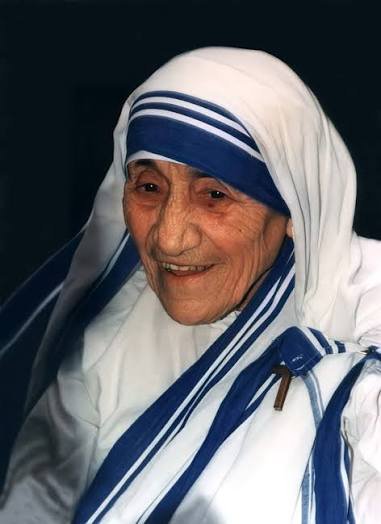
Saint Mother Teresa: a life of love, service and mercy
Childhood and calling to religious life
Mother Teresa was born on 26 August 1910 as Agnes Gonxha Bojaxhiu in Skopje, which at that time was part of the Ottoman Empire and is now in North Macedonia. Her family were of Albanian origin and deeply rooted in the Catholic faith. Her mother, in particular, instilled in her the importance of prayer, mercy and helping those in need. Even as a child, Agnes learnt that faith is not confined to the church, but must be demonstrated through service to one’s neighbour.
By the age of about twelve, she already felt the desire to dedicate her life to God.
At the age of 18, she joined the Order of the Sisters of Loreto and took the name Teresa – after Saint Thérèse of Lisieux.
As a nun, she was sent to India, where she initially worked as a teacher at St Mary’s School in Calcutta. She later became the school’s headmistress.
A calling to do more
The decisive turning point in her life occurred on 10 September 1946. During a train journey from Kolkata to Darjeeling, Mother Teresa experienced, in her own conviction, a special call from God. She understood this call as a commission from Jesus to leave the school and devote herself entirely to the poorest of the poor.
She recognised in this her new mission: not only to help the children at the school, but above all those whom no one else noticed – the sick, the dying, the homeless and the outcasts.
After many discussions and with the Church’s permission, she left the Sisters of Loreto in 1948, initially living alone in the slums of Kolkata and beginning her ministry. She learnt the basics of nursing and cared for people living on the streets. Her guiding principle was: every human being possesses an inalienable dignity, because every human being is a creature of God.
Foundation of the Missionaries of Charity
Sister Teresa stood out in the slums, and more and more women joined her to devote themselves entirely, alongside her, to the outcasts.
In 1950, Mother Teresa founded the Missionaries of Charity. In addition to the traditional religious vows of poverty, celibacy and obedience, the sisters commit themselves to a special promise: they wish to serve the ‘poorest of the poor’.
The order grew rapidly. The sisters established children’s homes, schools, infirmaries and hospices. The hospice (‘Nirmal Hriday’) in Kolkata became particularly well known. There, people whom no one else was willing to care for found a place where they could live and die with dignity.
For Mother Teresa, every person was a place of encounter with God. She once said:
“Every person is Christ in another form.”
A well-known story tells of a man who was lying on the street, seriously ill and abandoned. Many people walked past him because his condition put them off. Mother Teresa took him in, washed him, tended to his wounds and stayed with him. The man, who had previously felt he was of no value to anyone, was able to realise: “I am a human being; I am loved.”
Another incident illustrates her inner attitude. When someone asked her how she could endure the gruelling work with the sick and dying, she replied, in essence, that she did it out of love for Jesus. It was not success, recognition or gratitude that drove her, but the conviction that she would encounter God in those on the margins of society.
Recognition and the Nobel Peace Prize
Mother Teresa became known throughout the world. Many people admired her dedication, whilst others raised critical questions about her work and the conditions in her institutions. Nevertheless, she remained a symbol of practical charity for millions of people.
In 1979, she was awarded the Nobel Peace Prize. At the award ceremony, she emphasised that the world’s greatest deficiency was not only poverty, but also a lack of love and a lack of willingness to take responsibility for one another.
Her death
In the final years of her life, Mother Teresa grew increasingly frail. She suffered from heart problems and had to endure several hospital stays. Despite her health problems, she remained connected to the Missionaries of Charity right up to the end.
On 5 September 1997, Mother Teresa died in Kolkata at the age of 87. Her death sparked widespread sympathy around the world. India honoured her with a state funeral – a special tribute to a woman who had dedicated her life to the country’s poorest people.
Beatification and Canonisation
Following her death, the Church began the process of examining her life and virtues. Mother Teresa was beatified by Pope John Paul II as early as 2003.
On 4 September 2016, Pope Francis canonised Mother Teresa in St Peter’s Square in Rome.
In doing so, the Church was not recognising her as a completely flawless human being, but rather that her life had made God’s love visible in a special way.
The following reasons for her canonisation were particularly highlighted:
• Her love for her neighbour: she saw every person as a child of God and helped them regardless of their background, religion or social standing.
• Her mercy: she restored dignity to people who had been forgotten.
• Her humility: despite her worldwide fame, she did not put herself first, but rather focused on serving others.
• Her faithfulness: she remained true to her calling even in difficult times.
• Her hope: she showed that even small acts of love can change the world.
Lessons for Military Personnel
Mother Teresa can be an important role model for servicemen and women. Her life serves as a reminder that strength does not stem solely from physical ability or assertiveness. True strength is demonstrated by taking responsibility, standing by others and respecting the dignity of every human being. Mother Teresa teaches us that responsibility begins with noticing those who depend on our help and refusing to walk past their suffering.
Mother Teresa shows that it is not the scale of a task that makes a person great, but the love and attitude with which they fulfil their duty.
Feast day
The feast day of Saint Mother Teresa is 5 September.
St. Mother Theresa, pray for us!