
Resilience in Action: The 2025 AMI Mission for Spiritual and Psychological Readiness in Ukraine
Initiation – In late 2023, AMI EC (President and Vice-President) visited Kyiv on invitation by the Brotherhood. The visit was to showcase support for the Ukrainian case, to establish contacts, and to learn where AMI could help. A requirement existed to get Military chaplains, medical experts, and officers trained in the prevention and cure of PTSD/PTSS and Moral Injury. A train-the-trainer concept seemed to be the best approach. After the return, in the first half of 2024, an AMI program was designed, trainers recruited, curriculum written, and sponsors approached.
Mission Overview – So in 2024–2025, Apostolat Militaire International sponsored missions to Ukraine were conducted to advance the integration of mental health and spiritual care within the Ukrainian military chaplaincy system, both the National Guard and the Armed Forces of Ukraine. The delegation consisted of Prof Dr. Eric Vermetten (Leiden University Medical Center; Colonel, ret., Dutch Armed Forces, Support), Fr. Patrick Dolan (Ecclesiastical Assistant to AMI; Brigadier General, ret., U.S. Army Chaplain Corps), and Fr. Peter Peelen (Chaplain, Dutch Armed Forces, Marines, ret.). Together, they completed four missions: two led by Dr. Vermetten and Fr. Peelen, and two by Dr. Vermetten and Fr. Dolan.
Each mission was coordinated with representatives of the Interconfessional Ukrainian Brotherhood, who provided logistical support and operational briefings. The opening meetings confirmed a shared commitment among AMI, the Brotherhood, and local training institutions to strengthen psychological readiness and moral resilience among military chaplains. The primary objective was to deliver an interactive and structured program focused on the recognition and mitigation of psychological trauma, post-traumatic stress, and moral injury - emphasizing the integration of clinical insight with spiritual and ethical reflection.
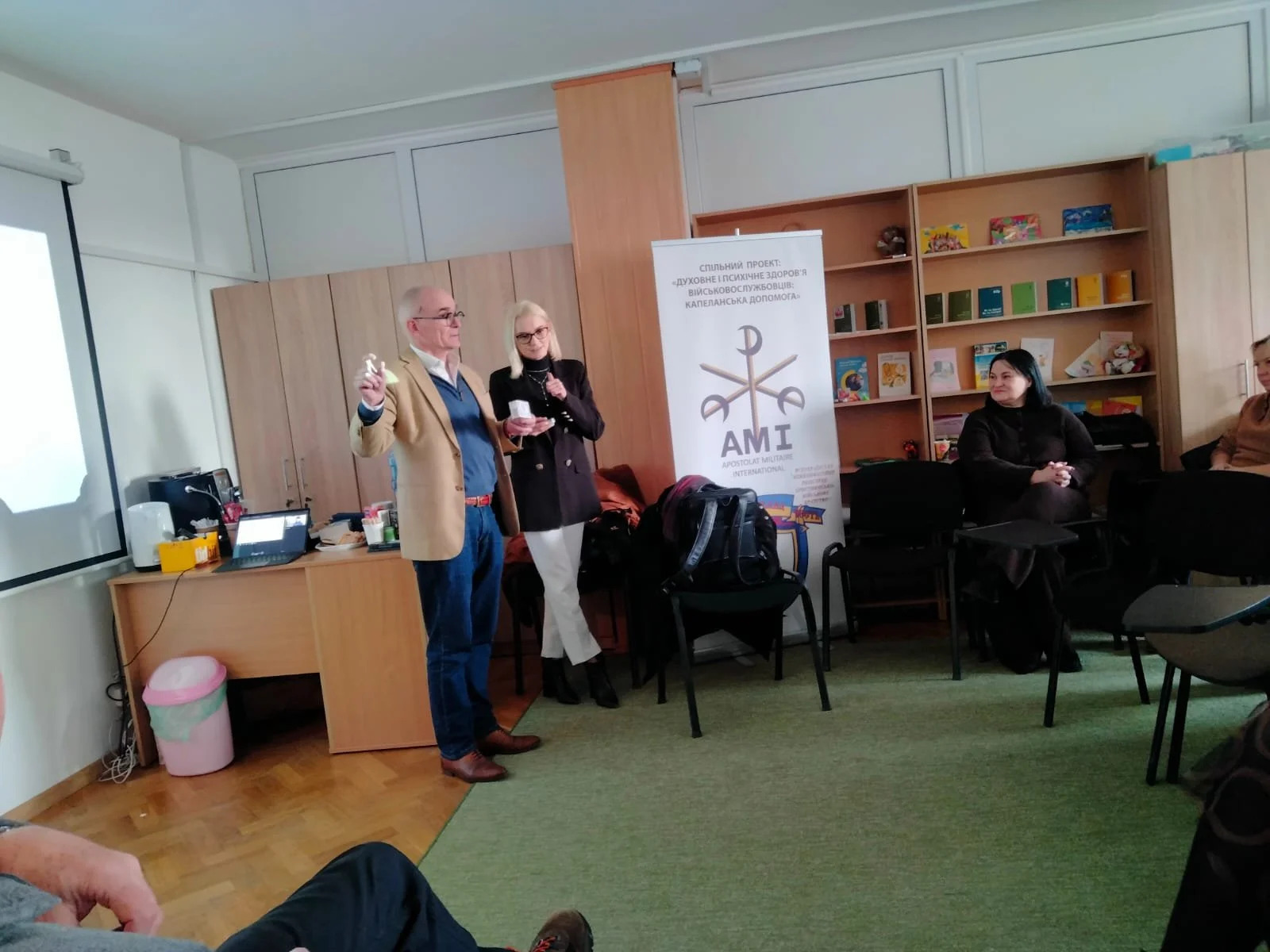
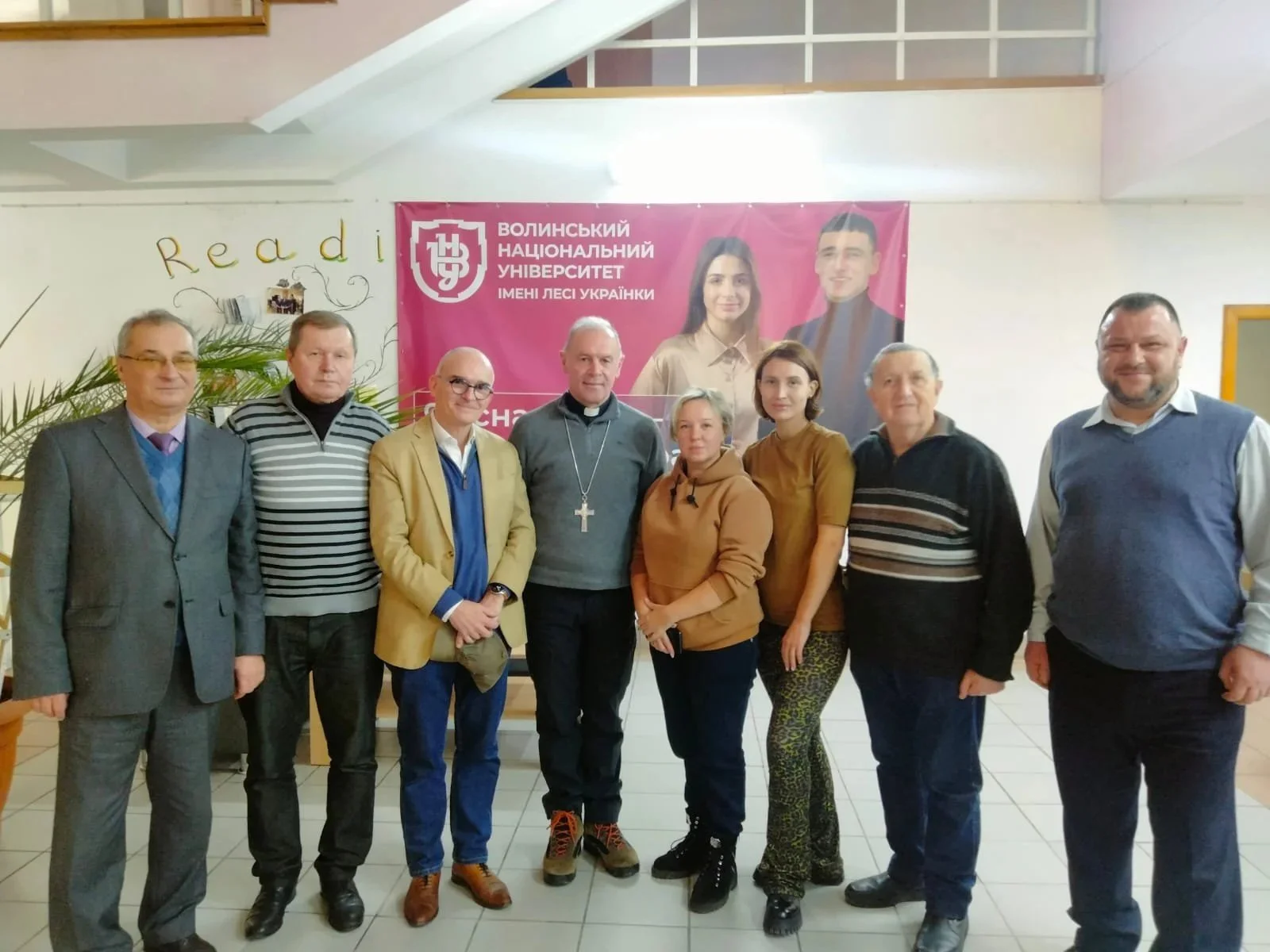
Preparatory discussions with Ukrainian counterparts helped define avenues for continued collaboration between mental health professionals, theological educators, and military leadership. These exchanges laid the foundation for sustained cooperation between medical and pastoral disciplines in addressing the psychological consequences of protracted conflict.
Training Program - The training programs consisted of structured one- and two-day sessions, supported by professional interpretation and organized in cooperation with Ukrainian military, governmental, as well as academic institutions. Participants included active-duty chaplains, advanced cadets, and newly commissioned chaplains preparing for front-line deployment.
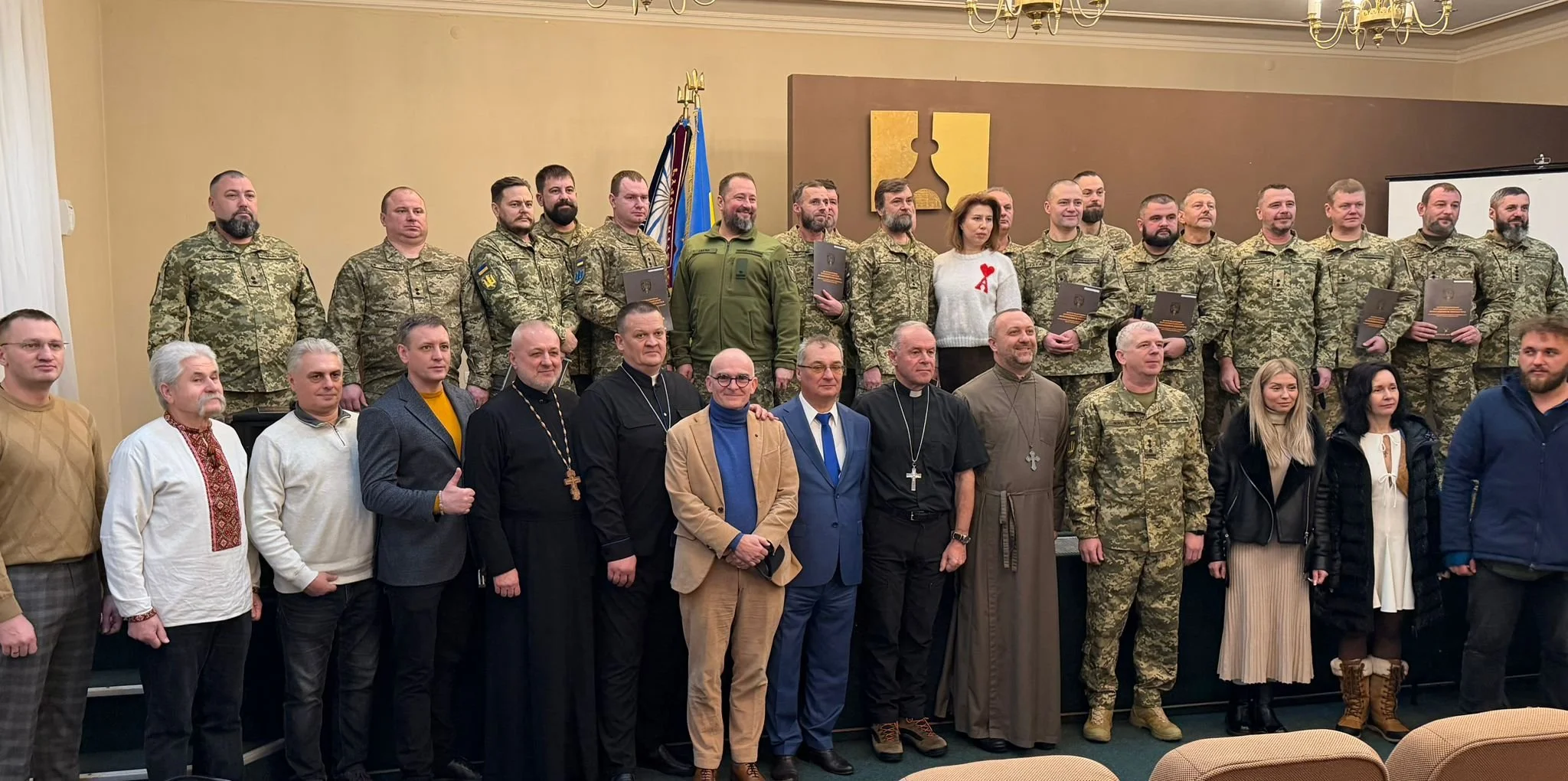
Each session combined lectures, interactive group discussions, and experiential exercises designed to deepen understanding of psychological trauma, moral injury, and resilience within a spiritual–ethical framework. On several occasions, the concluding day featured a formal ceremony acknowledging completion of the training cycle and reaffirming participants’ dedication to responsible leadership, moral integrity, and compassionate care for those under their pastoral supervision.
In addition to training activities, the mission included visits to mental health and rehabilitation centres to assess ongoing needs and explore opportunities for collaboration between spiritual, medical, and academic stakeholders.
Core Training Themes
1. Building Awareness and Adaptive Readiness - The sessions addressed post-traumatic stress disorder (PTSD) and moral injury (MI) as urgent realities within Ukraine’s prolonged war. Both were framed not merely as clinical conditions but as disruptions of identity, meaning, and moral coherence. Left unaddressed, these “invisible wounds” can lead to moral erosion, where desensitization and loss of empathy weaken both individual and collective conscience.
Through videos, testimonies, and open dialogue, participants explored how psychological distress manifests in the field and how it can silently undermine morale. Comparative examples from Western military reintegration programs underscore that the wounds of war are universal, though expressed through different cultural and historical lenses.
2. Strengthening Trust and Overcoming Stigma - Ukraine continues to carry a Soviet legacy in which mental illness once bore punitive consequences. Many soldiers still equate emotional distress with weakness or betrayal. The training addressed this stigma directly: healing begins when pain is recognized, named, and held safely within trusted relationships.
Chaplains were affirmed as safe listeners - guardians of confidentiality who preserve trust and morale within their units. They were trained to recognize behavioral cues, normalize emotional struggle, and facilitate timely referral to professional care when needed. In this way, the chaplain’s pastoral role becomes a gateway to early psychological intervention without stigma.
3. Practising Tools for Resilience and Moral Recovery - Participants practiced simple yet effective tools for immediate peer-to-peer and chaplain-led support: guided breathing, grounding exercises, and reflective dialogue. These techniques bridge body and mind, helping soldiers lower defensive barriers and reconnect with others.
A moral and spiritual framework was introduced through Just War principles, helping chaplains contextualize guilt, responsibility, and forgiveness amid the chaos of combat. By reframing misplaced self-blame within an understanding of leadership responsibility and tragic necessity, soldiers can begin to reconcile moral dissonance.
4. Connecting Faith, Purpose, and Collective Strength - The Colors of Spirituality—peace, beauty, life, truth, power, fellowship, and ritual—served as guiding metaphors for the human values that make life meaningful. Chaplains learned to use these symbolic “colors” as gentle yet powerful entry points for dialogue, helping soldiers rediscover purpose, belonging, and faith.
Throughout the training, a deep mutual trust developed between the Ukrainian chaplains and the AMI team. This trust enabled experiential exercises such as the Southern Hemisphere Tree—a living metaphor for grounding, rootedness, and shared growth. Participants repeatedly affirmed that while invisible wounds may thrive in isolation, connection, meaning, and community are their antidotes.
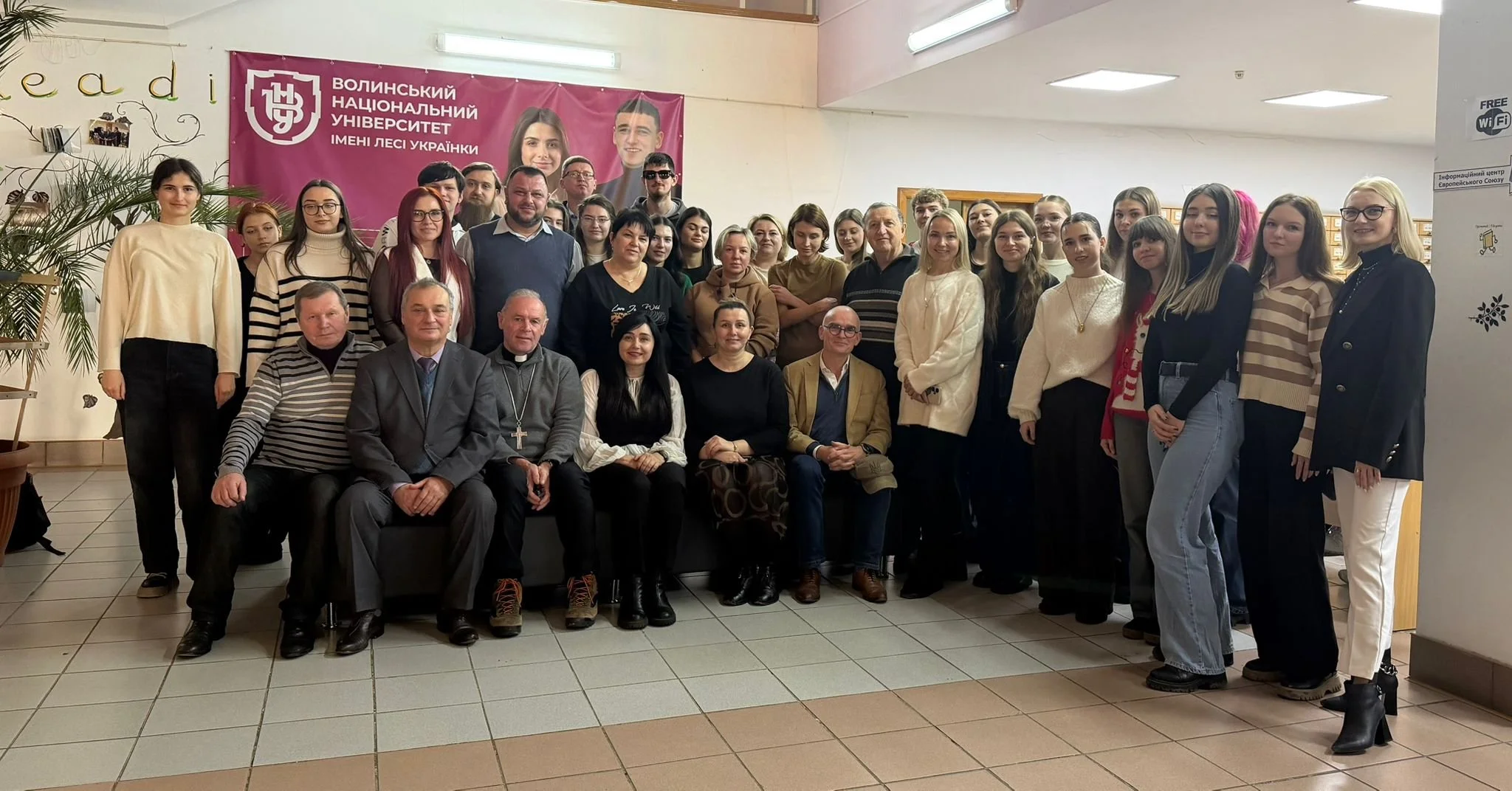
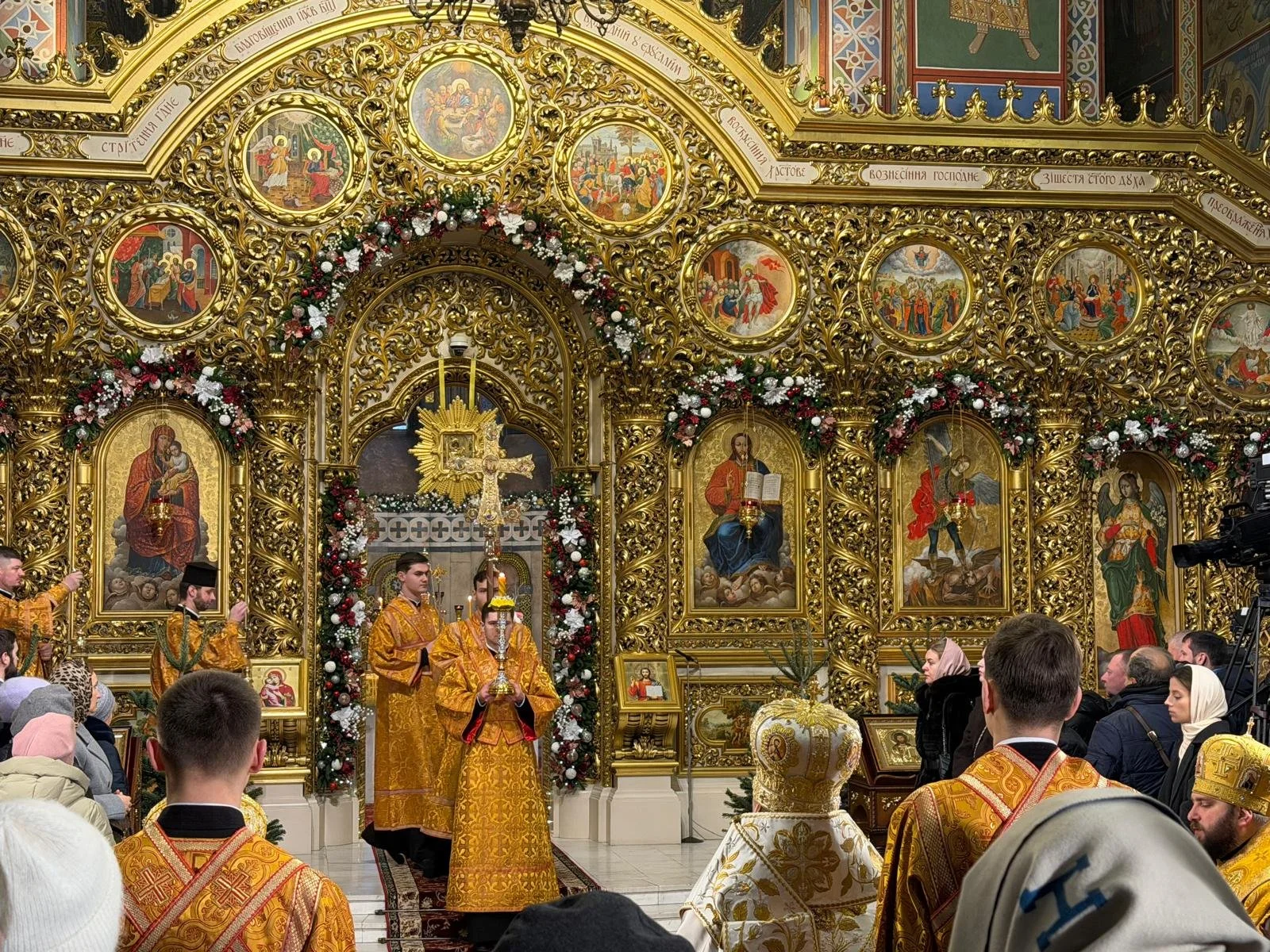
Reception and Broader Context - The AMI program, its development of the CMC mobile Application, and its integrative spiritual–psychological approach were warmly received by Orthodox, Catholic, and Evangelical leaders who attended the ceremonies. Their endorsement reflects a growing consensus: healing invisible wounds requires the partnership of faith and science. In a society under daily bombardment yet determined to preserve its humanity, such integrative approaches nurture coherence and hope.
Despite exhaustion and uncertainty, Ukrainians continue to choose life - expressed through worship, education, and the arts. This resilience, embodied in ordinary acts of faith and culture, represents a quiet resistance to moral despair.
Outlook - The missions reaffirmed the need for structured collaboration between medical and religious professionals in trauma recovery. Future goals include (1) joint training initiatives, (2) applied research on moral injury prevention, and (3) the development of chaplaincy guidelines adaptable to other conflict settings. In closing, resilience in action is more than recovery - it is the deliberate cultivation of moral strength and psychological readiness amid adversity. Ukraine’s chaplains do embody this living resilience, transforming pain into purpose and isolation into connection. Their work strongly affirms that resilience is both a national and moral imperative, sustaining dignity, compassion, and faith in the enduring worth of human life.
To date a total of 446 Ukrainian professionals have completed the training, including:
102 Military Chaplains of the Armed Forces of Ukraine.
121 Military Chaplains of the National Guard of Ukraine.
18 Chaplains assistants of the National Guard of Ukraine.
32 Theological students of the Orthodox Church of Ukraine.
26 Priests and students of the Roman Catholic Seminary.
34 Priests, religious of the Roman Catholic Church.
41 Social workers and civil servants of the government social and veteran department.
76 Cadets and officers from higher military educational institutions.
The average cost of delivering each of the individual training programme is £7500. The projects has thus far been made possible by the generous support of:
Roman Catholic Soldiers Association of Austria (AKS),
Roman Catholic Soldiers Association of Germany (GKS),
Association of Christian Conferences (ACCTS),
Roman Catholic Bishopric of the UK Armed Forces Trust,
Netherlands Veterans Institute (NVI),
National Catholic Homefront (Netherlands),
ACOM (Netherlands),
Stichting voor Steun aan het katholiek Vormingswerk voor Militairen (Netherlands),
Anonymous private donations.